🛰 Introduction: “Hey, have you noticed it doesn’t drop out as often lately?”
Not too long ago, Rakuten Mobile was often criticized for having “no signal” or “frequent call drops.”
While small issues still occur occasionally, it’s been quite some time since we’ve heard of any major network outages specific to Rakuten Mobile — except during natural disasters like typhoons.
Curious about why network disruptions have become so rare, I did some digging while preparing this article.
And it turns out, the reason goes far beyond simply “adding more base stations.”
Behind the scenes, Rakuten Mobile has undergone a fundamental, structural evolution — a complete redesign of how its network operates.
As an engineer myself, I find these technical reforms in Rakuten Mobile’s network truly remarkable.
Today, I’d like to unpack the secret behind this newfound stability — in plain, easy-to-understand language.
⚙️ 1. Open RAN: From Trial and Error to a New Era of Stability
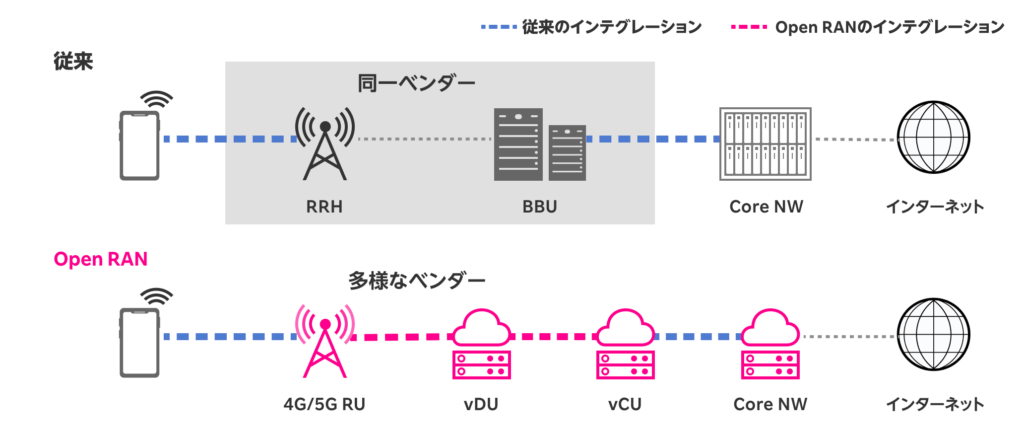
Rakuten Mobile operates Japan’s only fully virtualized Open RAN (Radio Access Network) —
an innovative architecture that runs all base stations and network functions on software rather than dedicated hardware.
Unlike traditional carriers that depend on specialized equipment, Rakuten controls its network through the cloud.
In the early stages, there were plenty of bugs and latency issues, leading to problems like “signal drops while moving” or “brief no-service moments.”
However, since 2023, the adoption of AI-driven load balancing and network optimization has dramatically improved overall performance.
☁️ 2. Cloud-Native Architecture: A Network That Recovers Itself Instantly
Rakuten Mobile’s network is built on a cloud-native architecture, much like AWS.
Even if part of the system goes down, other nodes automatically recover —
in other words, it’s not a “never-stop” network, but a “never-stay-down” network.
In the early days, this switchover process didn’t always function smoothly,
sometimes causing delays in recovery.
Today, however, Kubernetes-based failover mechanisms are running stably,
allowing the network to recover from failures within minutes.
🧪 3. Technical Validation Accelerated by the “Rakuten Mobile Open Innovation Lab”
What supports Rakuten Mobile’s network stability is a robust ecosystem for research and testing — both internally and externally.
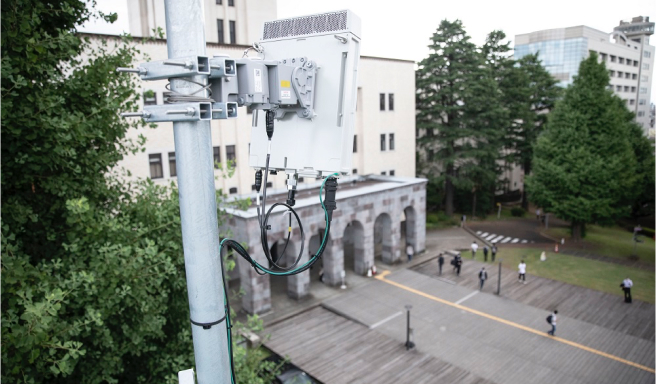
The company established the Rakuten Mobile Open Innovation Lab within the Rakuten Cloud Innovation Lab,
and has also provided virtualized Open RAN test environments connected to this lab
at the University of Tokyo and Tokyo Institute of Technology campuses.
Through this setup, partner companies and researchers in Japan and abroad can remotely access Rakuten’s test environment
to experiment with Open RAN technologies.
They can run software and see results instantly — without traveling on-site or setting up their own infrastructure.
This approach has dramatically improved efficiency, enabling faster development cycles and lower operational costs.
This “Open Lab” initiative has become the foundation that drives both the quality improvement and stabilization of Open RAN technology.
📡 4. Three Times More Base Stations + Platinum Band: Closing the “Physical Gaps”
Between 2021 and 2024, Rakuten Mobile tripled the number of its base stations.
This expansion has virtually eliminated coverage gaps in urban areas, and as of 2025,
the company has begun full-scale deployment of the Platinum Band (700MHz).
This low-frequency band penetrates buildings and underground areas more effectively,
significantly improving communication quality in rural regions and indoor environments.
In short, Rakuten Mobile’s network stability is now being strengthened from both the software and hardware sides.
📶 5. Eliminating “Dead Zones” with Millimeter-Wave + Relay Station Experiments
In October 2025, Rakuten Mobile conducted a joint field trial with Institute of Science Tokyo
to extend millimeter-wave (28GHz) communication using relay stations.
(Source: Rakuten Mobile Official Blog, October 17, 2025)
By using analog relay stations (repeaters) that receive, amplify, and retransmit radio signals,
the experiment successfully achieved stable, ultra-high-speed connectivity exceeding 1Gbps,
even in challenging environments such as indoor spaces or valleys where radio waves typically struggle to reach.
This technology compensates for the inherent weaknesses of high-frequency millimeter waves
and represents an essential “next step” in expanding network coverage.
🚁 6. Smarter Maintenance with Drone-Based Inspections
In summer 2025, Rakuten Mobile also began testing drone-based inspections of its base stations.
(Source: Rakuten Mobile Official Blog, August 21, 2025)
Equipped with AI-powered cameras, these drones automatically capture and analyze antenna tilt, cable wear, and other maintenance indicators,
replacing traditional high-altitude manual work with a safer and faster process.
This approach not only enhances maintenance efficiency and safety,
but also enables rapid inspection and recovery in the event of natural disasters.
🤖 7. AI-Driven Operations: Predicting and Preventing Network Congestion
Rakuten Mobile’s AI predicts traffic surges and automatically adjusts bandwidth by time and area.
Thanks to this intelligent control, issues like “slow speeds at night” or “no connection at crowded event venues” have greatly decreased.
In essence, AI acts as the “health manager” of the network, detecting early signs of strain and resolving them before they become problems.
This proactive monitoring is one of the key factors behind today’s stable operations.
🌈 Conclusion: Quiet, Steady Progress Behind the Scenes
| Key Factor | Improvement | Result |
|---|---|---|
| Open RAN | Software stabilization & AI optimization | Fewer connection drops |
| Cloud-Native Architecture | Auto recovery & redundancy | Faster failure recovery |
| Open Innovation Lab | Remote testing environment | Accelerated technology development |
| More Base Stations + Platinum Band | Expanded coverage | Fewer dead zones, better indoor signal |
| Millimeter-Wave + Relay Stations | High-frequency coverage | Eliminated “no signal” areas |
| Drone-Based Maintenance | Smart inspections | Faster, safer recovery |
| AI Operations | Traffic optimization | Improved speed during peak hours |
🗣 A Word from an Engineer
The essence of communication technology isn’t about never stopping —
it’s about recovering instantly when it does stop.
Rakuten Mobile is building a living, self-healing network powered by cloud and AI technologies.
Behind the stability of our daily infrastructure lies the quiet dedication of countless engineers and researchers.
Personally, I believe this kind of work — making the ordinary seamless for everyone —
is the truest expression of what it means to be an engineer.
Even if it doesn’t make headlines, creating a world that never stops is something truly worth striving for.
Here’s to the continued evolution of Rakuten Mobile.
📖 List of Sources
Rakuten Symphony AI-Powered RIC Introduction Article (Telecom Review Asia, 2024)
Rakuten Mobile Official Blog (October 17, 2025) Millimeter Wave Demonstration Experiment
Rakuten Mobile Official Blog (August 21, 2025) Drone Inspection
Rakuten Mobile Expands 5G Coverage in Kanto Region by 110%(Rakuten Mobile Press Release, 2024/11/27)
Opensignal Japan Mobile Network Experience Report 2023
Related Articles

Comprehensive Guide on Rakuten Mobile’s Contract Period and Cancellation Fees

How to Cancel Your Rakuten Membership: A Simple Step-by-Step Guide

Rakuten Mobile eSIM Guide | Comprehensive Explanation of Setup, Benefits, and Compatible Devices

Easy for Everyone! How to Cancel Rakuten Mobile

How to Switch from Physical SIM to eSIM for Free